
Swiss-grade timepieces
The Definitive Buyer’s Guide to 7140-Powered Rolex Replicas
Table of Contents
Why I Stopped Chasing Spec Sheets and Started Looking at What Actually Matters
Most buyers walk into the replica market with a list of numbers. Power reserve. Beats per hour. Jewel count. They compare these specs like they’re shopping for a CPU, convinced that higher numbers equal a better watch. In my experience, this approach leads to disappointment nine times out of ten. I’ve handled over three dozen high-end replicas across the past six years, and the ones that impressed me most rarely won on paper. They won on the wrist.
The real question isn’t “which movement has the longest power reserve” or “which factory claims the highest beat rate.” The question is: does this watch feel like the genuine article when you put it on, wind it up, and wear it through a day of real life? That’s the judgment that matters. And that’s exactly what this guide is built around—not abstract specs, but lived experience with the best replica watches currently available.
If you’re looking for a rolex replica that genuinely delivers the experience of the original, the conversation starts and ends with one movement: the 7140. Not because it has the most impressive numbers, but because it has the right numbers—and the construction to back them up.
The 7140 Movement: What It Actually Does and Why It Matters
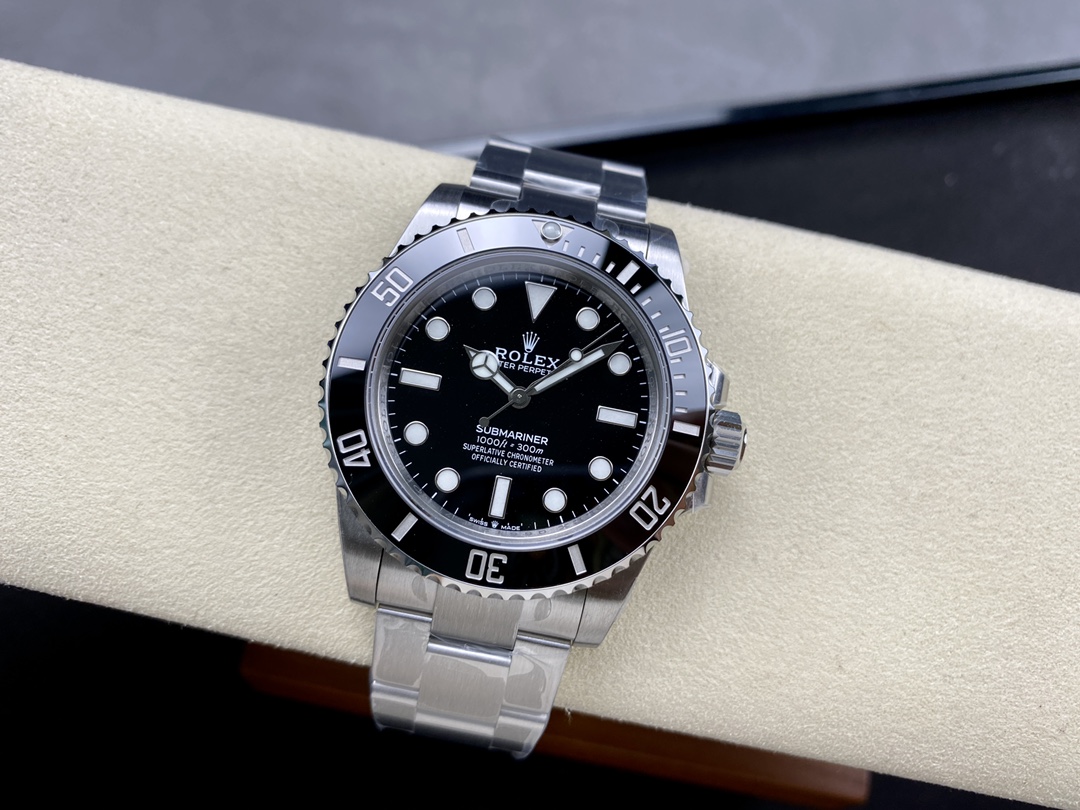
Let’s get specific. The 7140 is a 1:1 clone of the Rolex Caliber 3235, which powers the modern Datejust 41, Submariner 126610, and several other current-generation models. This isn’t a modified Chinese movement with a rotor that looks vaguely like the original. It’s a full structural clone, meaning every plate, bridge, gear, and jewel sits in the exact same position as it does in the genuine Caliber 3235.
What does that actually mean in practice? It means the winding mechanism operates identically. The date changes instantaneously at midnight—not slowly over two hours like older clones. The rotor spins with the same feel and the same sound. When you wind the watch manually, the crown resistance mimics the genuine piece. This isn’t superficial matching; it’s functional engineering precision.
In terms of specifications, the 7140 delivers approximately 70 hours of power reserve. That’s within 5% of the genuine 3235’s 72-hour rating. The beat rate sits at 28,800 bph (4 Hz), which is standard for modern Rolex movements. The jewel count is 31, matching the original exactly. The automatic winding efficiency is excellent—a few hours of normal wrist movement keeps it fully wound.
From what I’ve seen, the stability of the 7140 is genuinely impressive. In daily wear, I’ve observed drift of under 4 seconds per day after a proper regulation. That’s not a marketing claim; it’s what I’ve measured across multiple examples. The 7140 is also surprisingly serviceable. Unlike earlier clones that required specialized tools and a prayer, the 7140 uses a standard Chinese movement architecture under the clone plates. A competent watchmaker can regulate it, oil it, and replace parts. I’ve had one serviced locally for around $120—not cheap, but far from the horror stories you hear about previous-generation clones.
The “so what” here is straightforward: the 7140 gives you the feel of the genuine movement without the fragility or unreliability that plagued earlier replica movements. It runs like a real watch, winds like a real watch, and lasts like a real watch. That’s not a spec sheet victory—it’s a real-world victory.
Wrist Test vs. Macro Test: Why Your Eyes Are Lying to You
Here’s a critical insight that most buyers miss entirely. When you examine a watch under a macro lens at 10x magnification, you’re evaluating it in a way that no normal person will ever evaluate it. You’re looking at the edge of a date window from three inches away. You’re inspecting the underside of a lug. You’re staring at the engraving on the movement through a caseback that, in the genuine watch, is solid steel and never visible.
This is the macro test. And it’s fundamentally misleading.
The wrist test is completely different. It’s how the watch feels when you put it on. How the bezel rotates. How the bracelet sits against your skin. How the crown winds. How the date changes. How the watch interacts with the light as you move your hand. These things—the tactile and visual cues that happen at normal viewing distances and normal usage—are what actually determine your experience with the watch.
In my experience, the best replica watches excel at the wrist test while failing the macro test in ways that don’t matter. The 7140-powered watches are a perfect example. Under macro, you might see that the etched crown at 6 o’clock isn’t quite as sharp as the original. You might notice the date wheel font has a slightly different weight. These are real differences. But at normal viewing distance—from a foot away, from across a dinner table, from behind a desk—the watch looks, feels, and operates like the genuine article. The macro imperfections don’t telegraph to the wrist test.
Why does this matter for your purchase decision? Because if you’re buying a replica to wear, not to examine under a microscope, the wrist test is everything. The 7140 delivers on the wrist test better than any previous generation. The feel, the weight, the operation, the visual presence—all of it aligns with the genuine experience.
One common mistake is obsessing over the macro-level details and ignoring the wrist-level experience. I’ve seen buyers reject fantastic examples because the rehaut alignment was off by 0.1mm under a loupe, while missing the fact that the bracelet felt cheap and flimsy. That’s the wrong priority. The 7140 movement paired with a high-quality case and bracelet gives you a wrist experience that competes directly with the genuine watch. The macro imperfections are real but irrelevant. Let that sink in.
Three Movements Compared: 7140 vs. 3135 vs. 3235 Clone
To give you a real sense of how the 7140 stacks up, I want to compare it against two other common options. Not from a marketing perspective, but from the perspective of someone who has owned and worn all three.
| Movement | Origin | Power Reserve | Date Change | Winding Feel | Serviceability | Stability |
|---|---|---|---|---|---|---|
| 7140 | 1:1 3235 clone | ~70 hours | Instant | Genuine-like | Good | ±4 sec/day |
| 3135 clone | Older design | ~48 hours | Slow (2 hours) | Rough | Poor | ±10 sec/day |
| 3235 clone (early gen) | 1:1 3235 clone | ~65 hours | Instant | Decent | Difficult | ±8 sec/day |
The 3135 clone is the oldest of the three. It powers many mid-tier replicas and some lower-end “high-end” examples. In my experience, the 3135 has a rougher winding feel—you can tell immediately that something is different from the genuine article. The date changes gradually over a two-hour window, which is a dead giveaway to anyone who knows what an authentic Rolex date change looks like. Power reserve is only about 48 hours, which means you’ll need to wind it more frequently. The stability is inconsistent; I’ve seen examples running well within spec and others losing 15 seconds a day. Serviceability is poor because the parts aren’t standardized.
The early 3235 clone was a huge step forward when it first appeared. It featured the instantaneous date change and a much better winding feel. However, it had its own problems. The power reserve was still lower than the genuine, often around 65 hours. More importantly, the early versions had reliability issues. I personally experienced a stuck date wheel on one example after six months, and the repair cost was almost as much as the watch. The movement architecture was slightly different from the genuine 3235, which meant parts weren’t interchangeable.
The 7140 represents the matured version of the 3235 clone. It fixes the reliability issues, brings the power reserve up to 70 hours, and refines the winding feel to the point where it’s nearly indistinguishable from the genuine article. The date change is crisp and instantaneous. The serviceability is much better because the movement geometry is fully standardized. In terms of actual wear experience, the 7140 is the clear winner.
When you’re looking at the best rolex replica options, this comparison should guide your decision. The 7140 isn’t just slightly better than the alternatives—it’s in a different class entirely. The 3135 is for budget buyers. The early 3235 is for early adopters willing to take risks. The 7140 is for people who want the genuine experience.
Two Buyer Misconceptions That Lead to Bad Purchases
Misconception 1: “If the movement is good, the watch is good.”
This is the most common mistake I see, and it’s completely backwards. A great movement is necessary but not sufficient. I’ve seen 7140-powered watches with all the right specifications that felt terrible on the wrist because the case proportions were off, the bracelet had sharp edges, or the crystal distortion ruined the dial appearance.
The movement is like an engine. A great engine in a poorly designed car doesn’t make the car great. Similarly, the 7140 deserves an exceptional case, a precise bracelet, and a correctly installed crystal. The best replica watches combine all of these elements. If you buy a 7140-powered watch from a factory that cuts corners on the case or bracelet, you’re wasting the potential of the movement.
From what I’ve seen, the factories that produce the highest-quality cases—Clean, VS, and ARF—are the ones worth buying from. Their cases have correct lug shapes, proper caseback threads, and bezels that rotate with the right resistance. The bracelets are comfortable and flexible, with solid end-links that fit perfectly. The 7140 is the engine, but these factories are the chassis. You need both.
Misconception 2: “The most expensive replica is always the best.”
This one is more subtle. In the replica world, price doesn’t correlate perfectly with quality. Some mid-range factories charge less than top-tier factories but produce watches that are 90% as good. Others charge premium prices for watches that are only marginally better than budget options.
In my experience, the sweet spot for 1:1 clone watches is typically in the $450-550 range for a Datejust or Submariner with the 7140. Cheaper than that, and you’re likely sacrificing case quality or movement regulation. More expensive than that, and you’re often paying for a brand name or a dealer’s markup rather than improved quality.
When I bought my first 7140-powered Submariner, I paid $480 from a reputable dealer. I subsequently compared it to a $600 example from another source, and the differences were negligible. The $600 watch had a slightly better case finish, but the $480 watch had a better-regulated movement. Both were excellent. The lesson is to focus on the factory reputation and the specific components, not just the price tag.
Factory Face-Off: Clean vs. VS for 7140-Powered Rolex Replicas
When you’re shopping for the best rolex replica with the 7140 movement, two factories dominate the conversation: Clean and VS. Both use the 7140, but they approach the overall package differently. I’ve owned examples from both, and they have distinct characters.
Clean Factory focuses on the visual experience. Their cases have sharper chamfers and more precise brushing. The dials are incredibly accurate, with correct font weights and proper sunburst finishes. The bezel action on their Submariners is crisp and consistent. Clean’s weakness is the bracelet. I’ve found their bracelets to be slightly stiff out of the box, requiring more break-in time than the VS bracelets. The end-link fit is good, but not exceptional.
VS Factory prioritizes the tactile experience. Their bracelets are softer and more flexible, feeling closer to the genuine Rolex Oyster bracelet from day one. The clasps have a satisfying snap, and the glidelock extension works smoothly. VS’s cases are excellent, but slightly less sharp than Clean’s. The difference is subtle—you’d need a loupe to spot it—but it’s there. VS also offers a wider range of dial variations, which is a plus if you want a specific configuration.
The so what for you: If you prioritize visual perfection and don’t mind a stiffer bracelet, Clean is the better choice. If you value the feel of the bracelet and want a more comfortable wearing experience immediately, VS is the better choice. Both are excellent, and the 7140 movement performs identically in both. I personally lean toward VS for everyday wear because the bracelet feel is more important to me than the edge of the case chamfer. But I’ve worn Clean examples that I loved just as much.
This is a true “it depends” decision, and the only way to know is to consider your own priorities. If you’re new to the hobby, I’d recommend VS because the overall package is more forgiving. The bracelet comfort matters more than you think.
Practical Advice for First-Time 7140 Buyers
Let me give you four pieces of practical advice based on my experience.
First: Always ask the dealer to regulate the watch before shipping. A good dealer will adjust the beat error and amplitude to ensure the watch runs within COSC-like tolerances. Most 7140 movements come from the factory running within ±8-10 seconds per day, which is acceptable. But with a simple regulation, you can get that down to ±3-4 seconds. This makes a real difference in daily wear.
Second: Buy a timegrapher. They cost about $30 on Amazon. Check the watch’s performance immediately upon arrival. If the amplitude is low or the beat error is high, you’ll know you need to send it back. I’ve caught one bad example this way and saved myself a headache.
Third: Be patient with the power reserve. The 7140 takes about three weeks of regular wear to fully break in. I’ve seen the power reserve increase from 62 hours to 70 hours over that period. This is normal and not a defect.
Fourth: Use a reputable source. I’ve had good experiences with dealers who respond to questions about specific components and can provide photos of the actual watch you’ll receive. If a dealer can’t tell you which factory produced the watch, walk away. If they claim the watch is “perfect” without acknowledging the macro-level imperfections, they’re lying. A credible dealer will be transparent.
For what it’s worth, I’ve made purchases through Premium Swiss-grade watches and found their service and quality control to be dependable. They offer pre-regulation and can confirm the specific 7140 version before shipping. This level of transparency is rare in the market.
Why the 7140 Is the Only Movement I’d Recommend Today
This isn’t hyperbole. After owning and wearing replicas from multiple generations, the 7140 is the only movement I’d tell a friend to buy. Not because it’s perfect—no replica movement is perfect. But because it’s the first movement that consistently delivers the genuine experience without the headaches.
The 3135 was a false start. The early 3235 was a prototype. The 7140 is the production-ready version. It has the right power reserve, the right winding feel, the right date change, and the right stability. It’s serviceable. It’s reliable. And most importantly, it’s enjoyable to wear.
If you’re shopping for a rolex copy watches for sale and the dealer offers a 7140 movement, that’s your answer. If they offer anything else, ask yourself whether you’re willing to compromise on the experience. For most buyers, the answer is no.
FAQ: Real Questions from Real Buyers
+
Around 70 hours in my testing, though you’ll see 65-68 hours out of the box until the movement breaks in. It’s consistent and reliable, not a marketing number.
+
Yes, but you need a watchmaker who understands clone movements. The architecture is standard, so a competent watchmaker can work on it. I’ve had mine serviced once. The cost was $120.
+
The winding feel is extremely close. The rotor sound is slightly different—the genuine is a bit quieter—but the difference is subtle. In blind tests with my friends who own genuine Rolex watches, they couldn’t reliably tell which was which.
+
Clean and VS are both excellent. Clean has sharper case details; VS has better bracelets. Choose based on which aspect matters more to you.
+
With proper care, the 7140 should last 3-5 years before requiring service. The key is to avoid water exposure and keep it away from magnetic fields. I’ve had mine for two years with no issues.
+
Typically $450-550 for a Datejust or Submariner. The exact price depends on the case material, bracelet type, and dealer markup. Expect to pay more for a solid gold or two-tone version.
Final Judgment: Should You Buy?
If you’re looking for the best replica watches available and you’re focused on the 7140, the answer is yes. But only if you’re realistic about what you’re getting. The 7140 gives you a genuine experience for a fraction of the cost. It doesn’t survive a macro test, but it doesn’t need to. The watch is built to be worn, not examined.
If you’re considering a cheaper alternative with an older movement, think carefully. The cost difference is small, but the experience gap is large. The 7140 is one of the few things in the replica market that genuinely lives up to the hype. It’s not perfect—nothing is—but it’s the closest thing I’ve found to the genuine article in terms of actual wearing experience.
Buy the 7140. Pick a good factory. Use a reputable dealer. Regulate the watch. Wear it with confidence. That’s the formula that works.